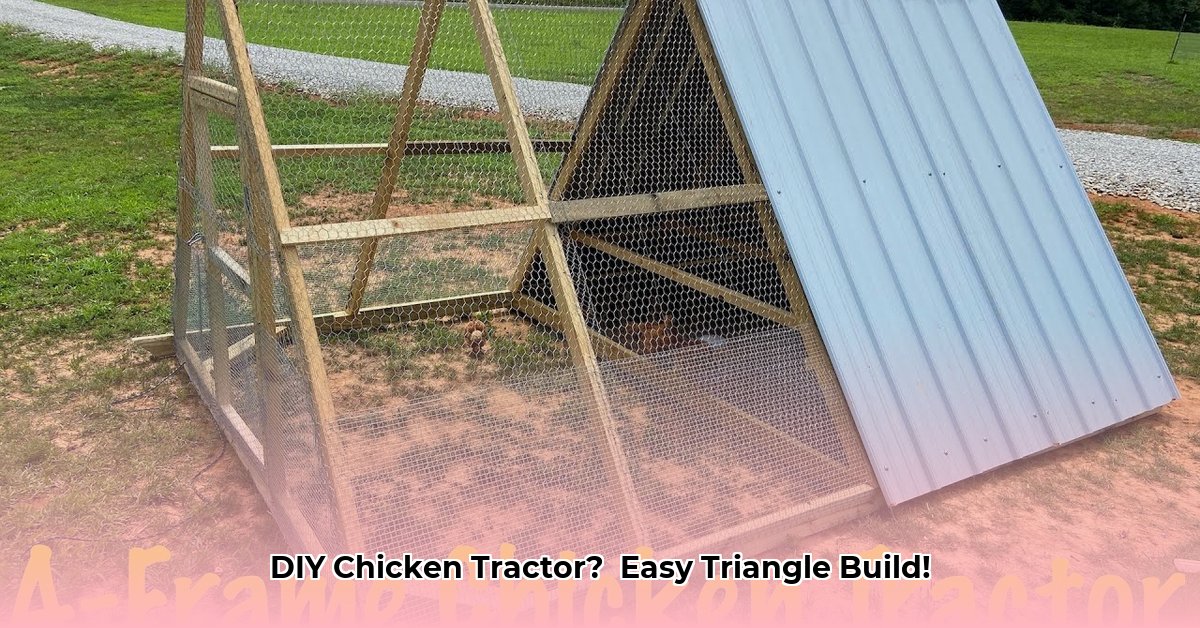
Want a simple, effective way to provide your chickens with fresh pasture while protecting your garden? Building a chicken tractor triangle is the answer! This easy-to-follow guide provides step-by-step instructions, along with tips and modifications to suit your needs and flock size. For more detailed plans, check out this chicken tractor design. Whether you're a seasoned DIYer or a complete beginner, you can build a fantastic mobile coop your hens will love. Let's get started!
Planning Your Triangle Coop: Size and Materials
Before you grab your tools, let's plan. How many chickens will your coop house? A general rule is 4 square feet per hen. So, six hens need around 24 square feet of space. Larger breeds will need slightly more room.
Materials Needed:
- Pressure-treated lumber (for durability)
- Heavy-duty wire mesh (to contain your chickens securely)
- Hinges for the door
- Heavy-duty wheels or casters (essential for mobility)
- Screws (exterior-grade recommended)
- Optional: Plywood or reclaimed wood for the roof (Consider cost-effectiveness!)
- Safety glasses and work gloves (Safety always comes first!)
Building Your Chicken Tractor Triangle: A Step-by-Step Guide
This project is surprisingly straightforward! Follow these steps for a successful build:
Cut the Lumber: Measure and cut three equally long pieces of lumber, determining the length based on your desired coop size. Double-check measurements before cutting! (Precise measurements are crucial for a stable structure.)
Assemble the Frame: Securely fasten the lumber pieces to create a strong triangular frame. Reinforce corners with extra screws for maximum stability. This creates a robust foundation. (Strong corners are essential for long-term durability).
Install the Wire Mesh: Attach heavy-duty wire mesh to the inside of the frame, creating the coop walls. Ensure a tight fit with no gaps to prevent escapes. Overlap and secure the mesh meticulously. (Preventing escapes is paramount for chicken safety).
Create the Access Door: Cut an appropriately sized section in the mesh for a hinged door. Select sturdy hinges capable of withstanding frequent opening and closing. (Easy access is vital for cleaning and chicken care).
Install the Wheels: Attach heavy-duty wheels or casters to one side of the triangle. Choose wheels suitable for your terrain. (Larger wheels are better for uneven ground).
Build the Run: Extend the wire mesh to create an enclosed run surrounding the triangle. This provides additional space for foraging and scratching. (Enrichment is crucial for happy, healthy chickens).
Construct the Roof: Create a simple roof using plywood, a tarp, or metal roofing sheets, ensuring adequate protection from the elements. Consider an overhang for extra shelter. (Protection from sun, rain, and wind is essential).
Weighing the Pros and Cons: A Balanced Perspective
Like any project, there are advantages and disadvantages:
| Feature | Advantages | Disadvantages |
|---|---|---|
| Design | Simple, affordable, easy instructions | Smaller space compared to traditional coops |
| Mobility | Easily moved to fresh pasture daily | Difficult on uneven terrain |
| Maintenance | Relatively low | Regular cleaning is vital |
| Sustainability | Uses readily available materials; improves soil fertility | More hands-on attention needed than stationary coops |
Tips & Tricks for Success
- Ventilation: Add vents or holes to improve airflow and prevent overheating, especially in warm weather. (Proper ventilation is critical for chicken health).
- Secure Wheels: Use strong brackets to secure the wheels, preventing accidents. (Safety is paramount).
- Weather Protection: A sturdy roof is vital to protect your chickens from the elements. (Consider climate conditions).
- Nesting Box: Add a nesting box inside to simplify egg collection. (Easy egg collection is a significant advantage).
Beyond the Basics: Adapting Your Triangle
The triangle design is adaptable. Consider these options:
- Larger Coop: Connect two triangles for a larger space.
- More Nesting Space: Attach a separate nesting box.
- Materials: Experiment with recycled materials to reduce costs and environmental impact.
Building a chicken tractor triangle is a rewarding project that improves your chickens' lives and your gardening practices. Happy building!